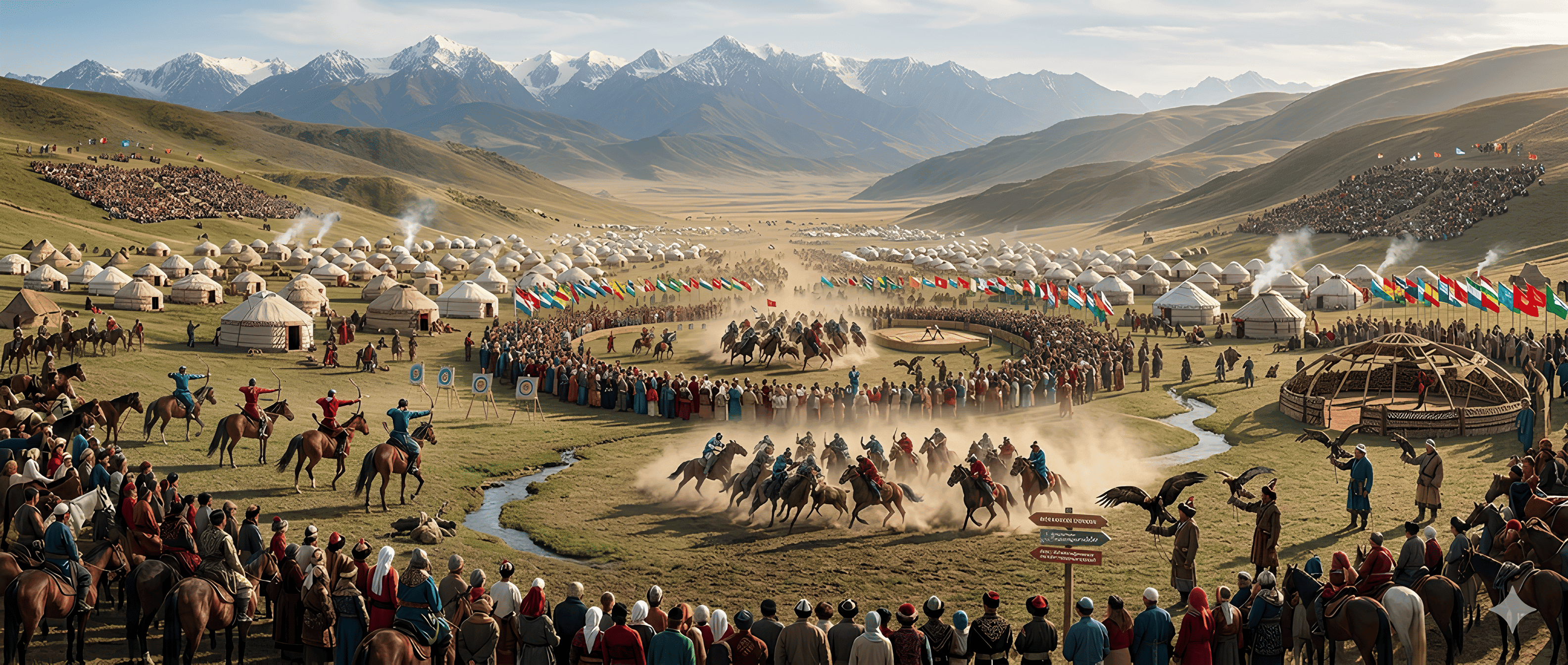
World Nomad Games
The World Nomad Games is a premier international cultural and sporting event bringing together dozens of nations and thousands of participants.
The Games aim to revive, preserve, and promote the intangible heritage, ethnosport traditions, and cultural identity of people worldwide.
World Nomad Games
The history of the World Nomad Games is more than just a chronicle of sporting events; it is a journey of how an ancient survival instinct evolved into a global spectacle.
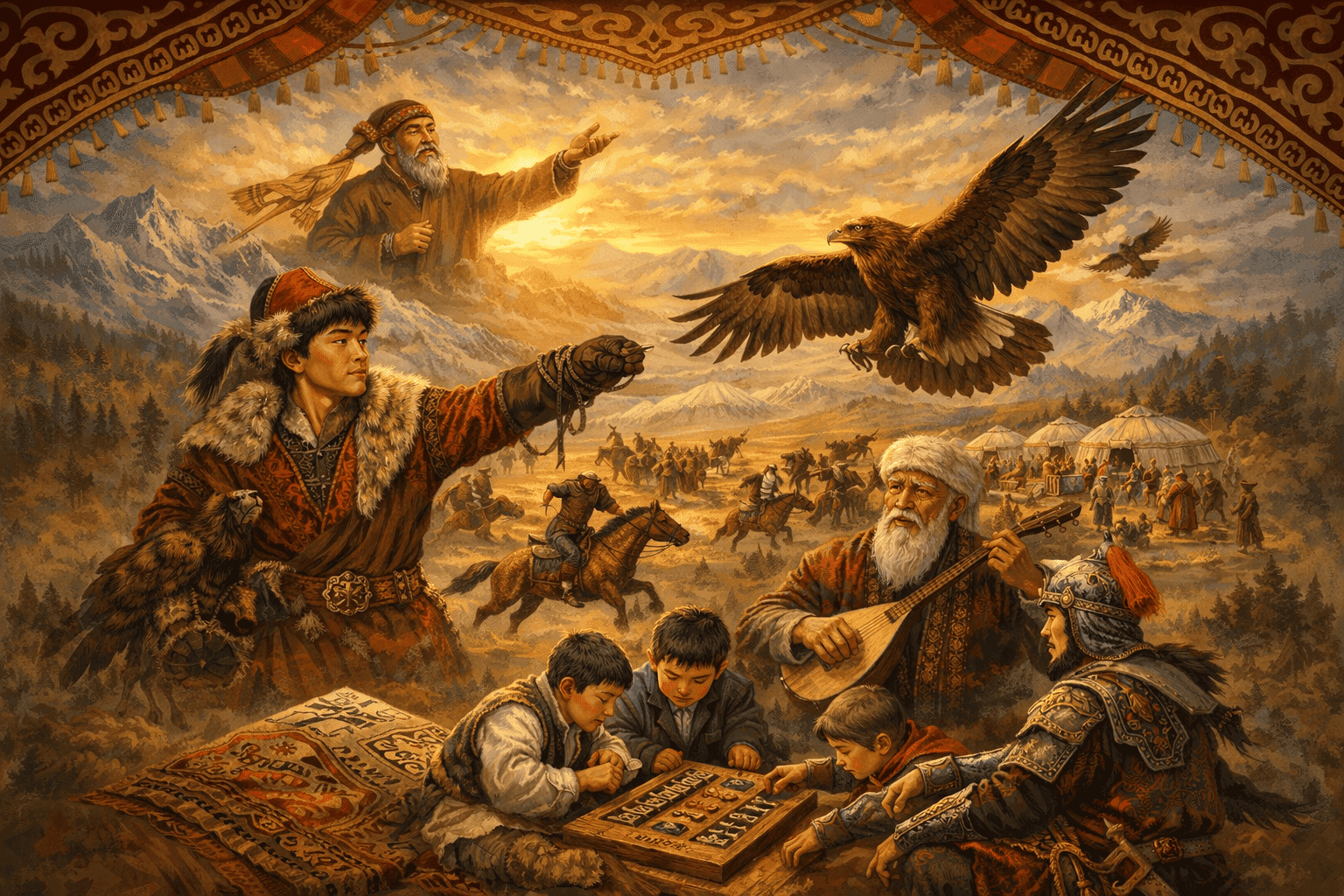
How Legends Were Born (Antiquity)
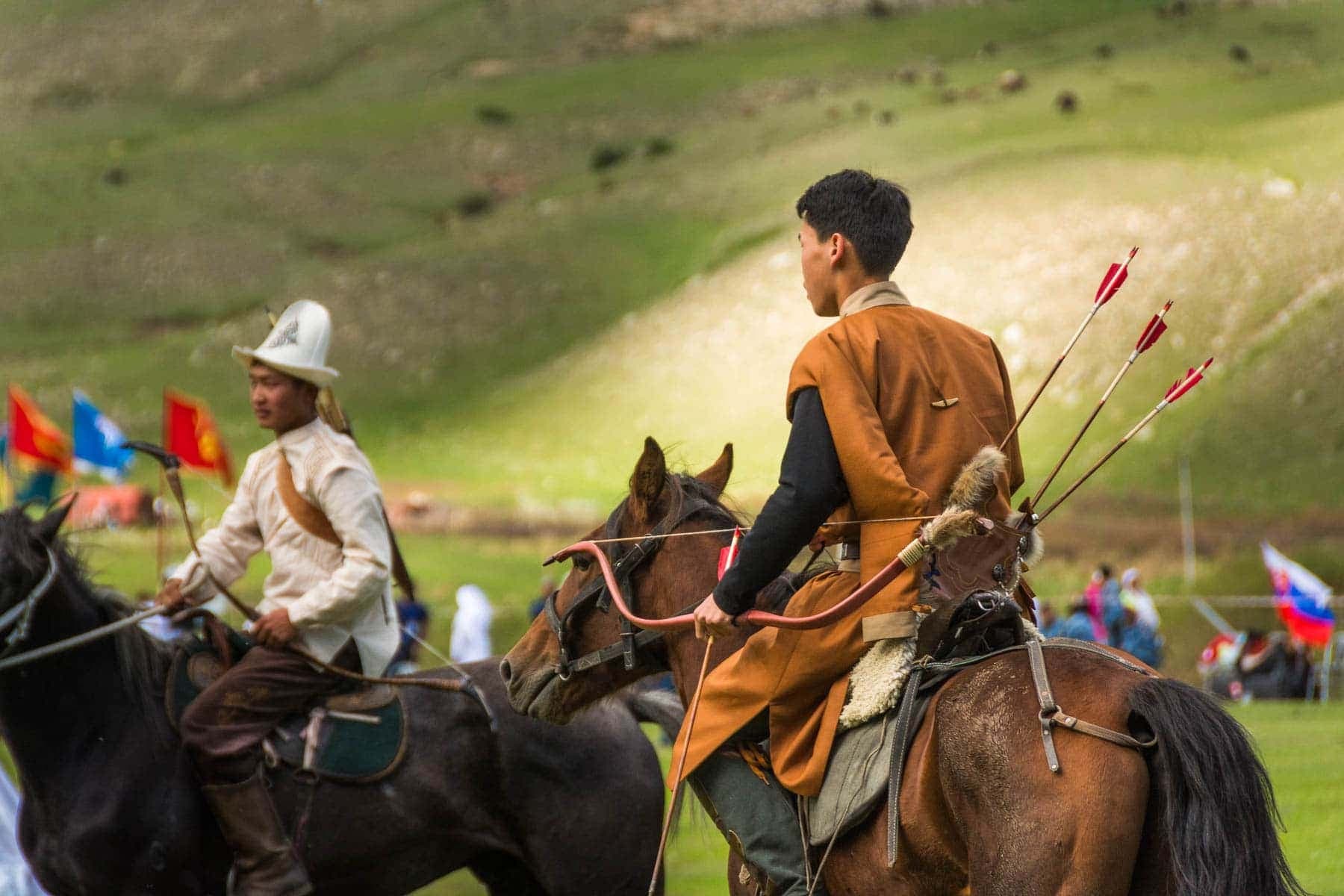
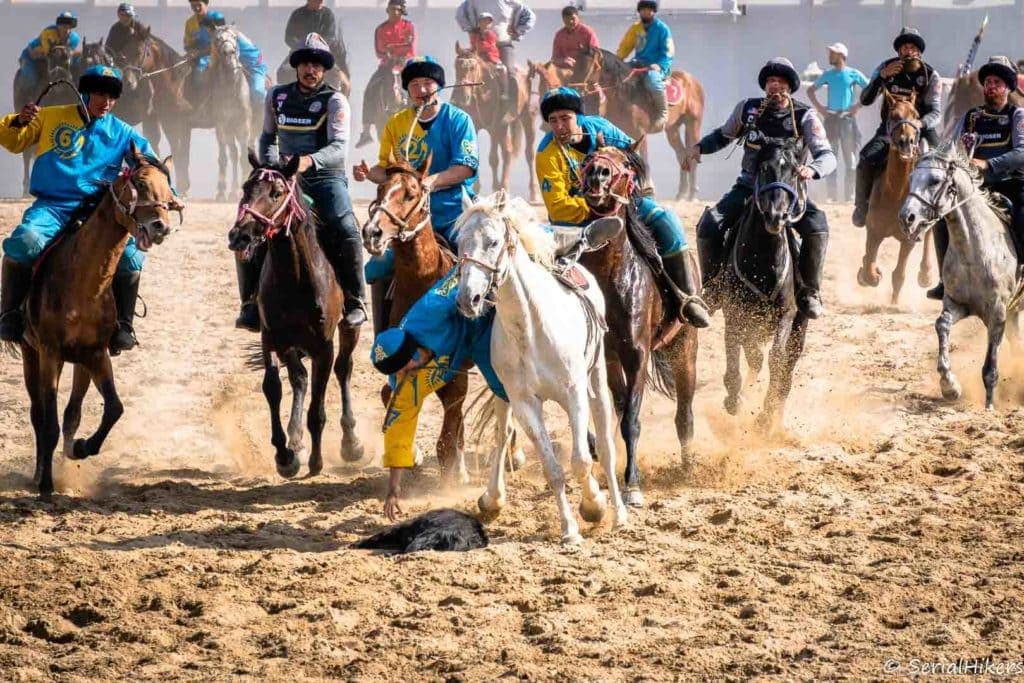
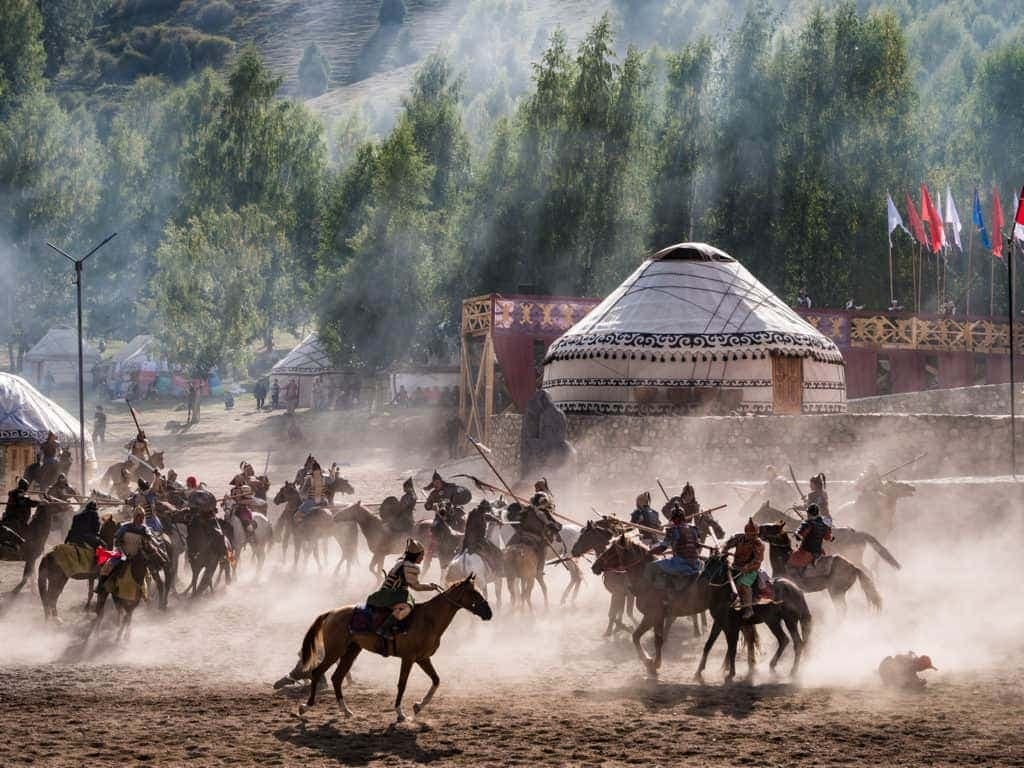
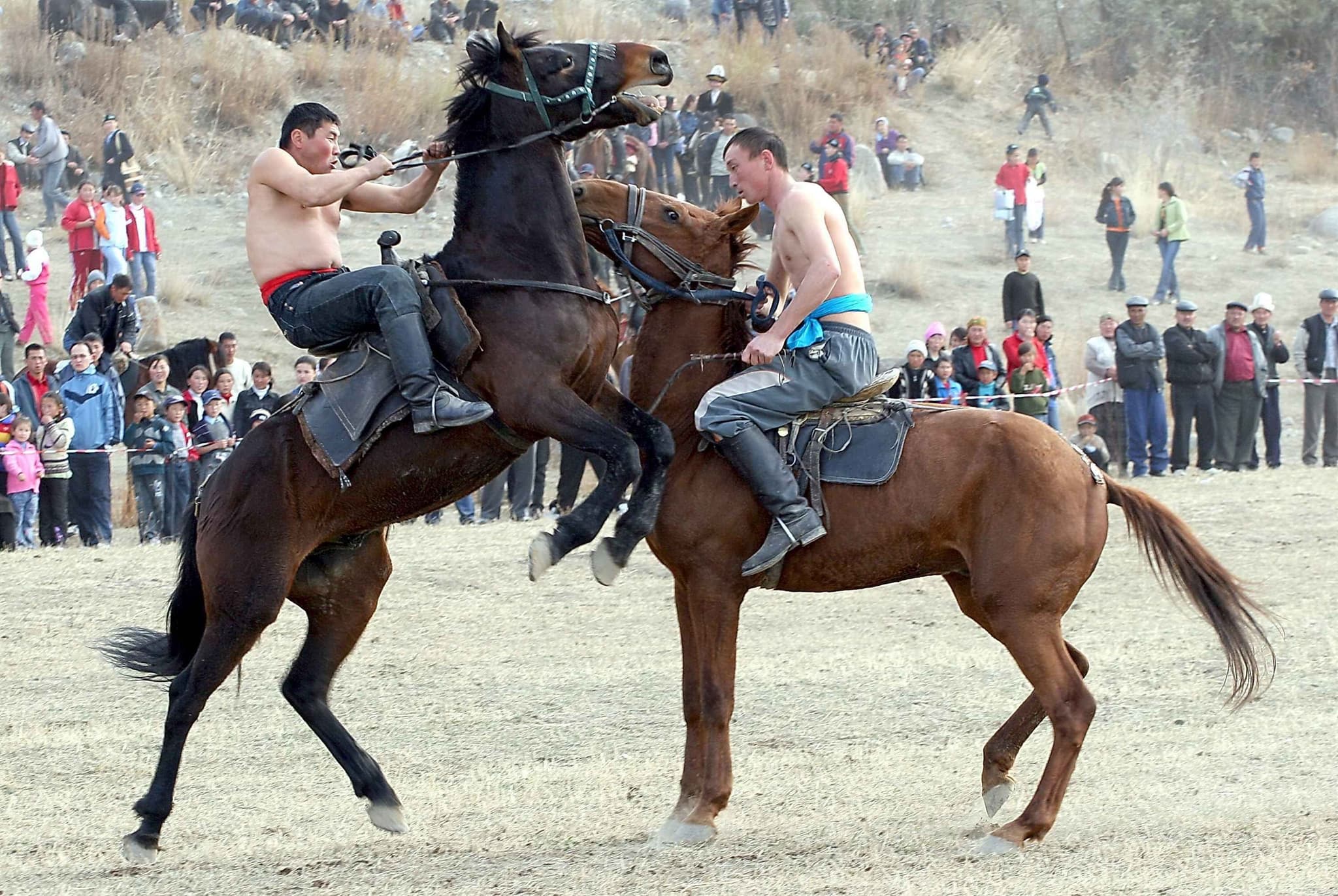
Thousands of years ago in the endless steppes, games were not mere entertainment—they were a brutal test of the right to survive. A nomad had no stadiums or rulebooks; the wilderness was the arena, and daily labor and warfare were the training. Every competition was born of absolute necessity. The famed Kok-Boru was more than a game; it was a school of survival. In the chaos of real battle, a rider had to snatch a fallen comrade from the ground at full gallop—the heavy carcass served as a training weight for this lifesaving skill. Archery from horseback demanded phenomenal precision: the arrow had to be released in the split second when all four hooves left the ground to ensure vibration didn't ruin the aim. On this skill rested the safety and hunger of the tribe. Endurance races tested the bond between man and horse; in the steppe, life depended on a horse's ability to cover dozens of miles without stopping to deliver vital news or find water. When rare moments of peace arrived and tribes gathered for great feasts—Tois—these harsh skills were transformed into grand spectacles. Amidst the thunder of hooves and the roar of the crowds, heroes were born. Their strength and agility became the stuff of legends, their names immortalized in song, passing the spirit of freedom from father to son.
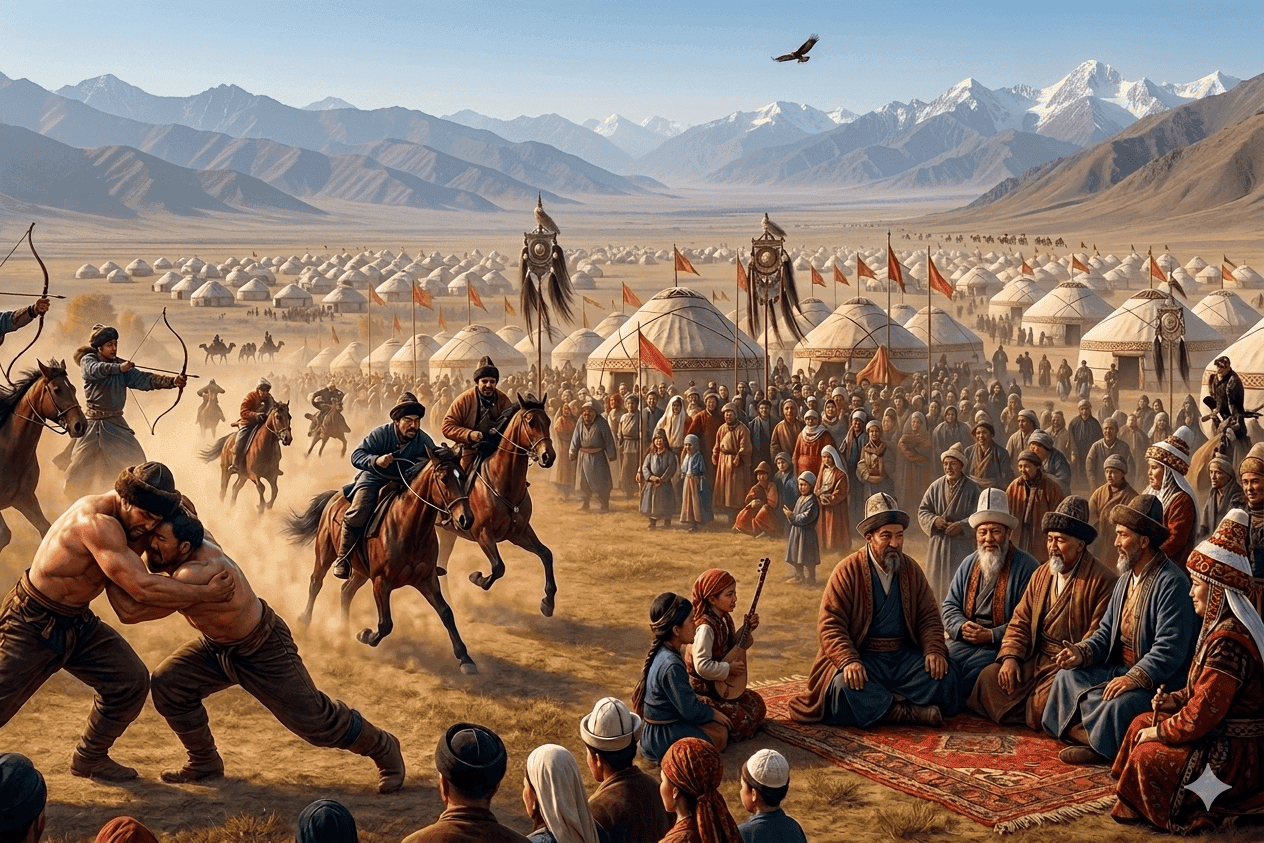
Echoes of the Ages (Traditions & Cultural Code)
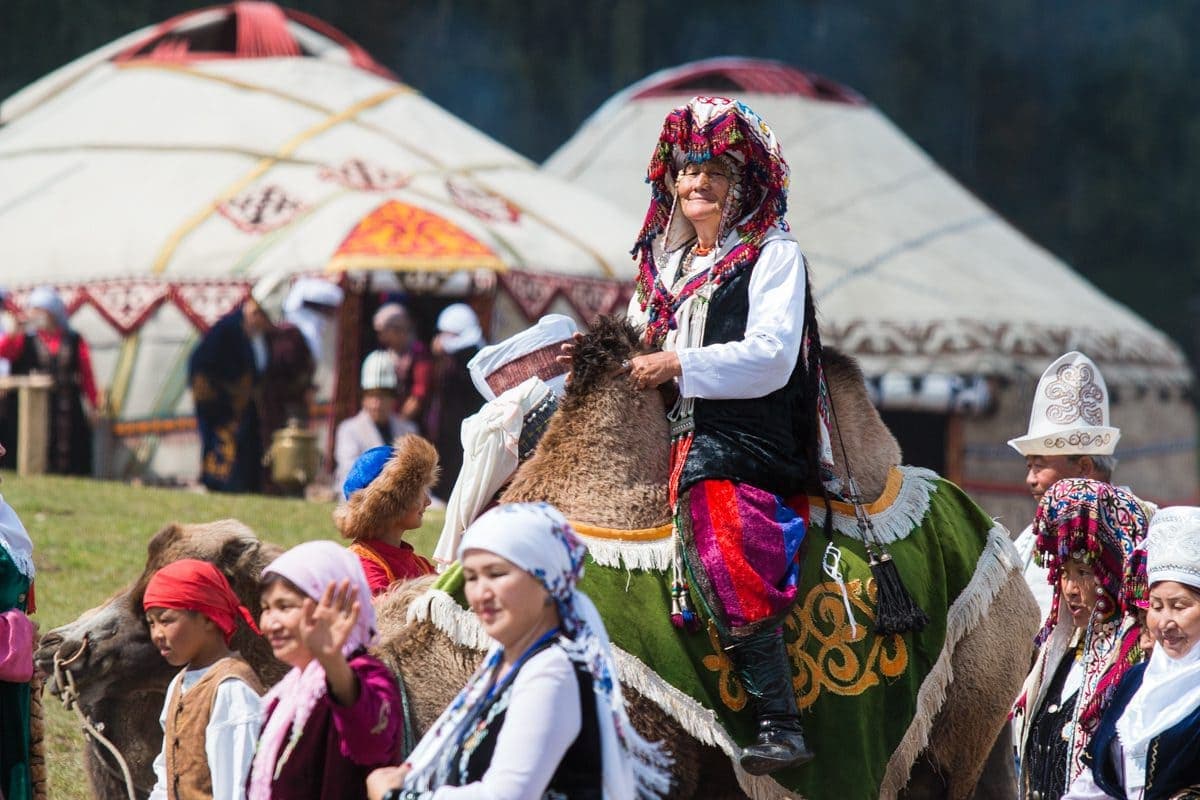
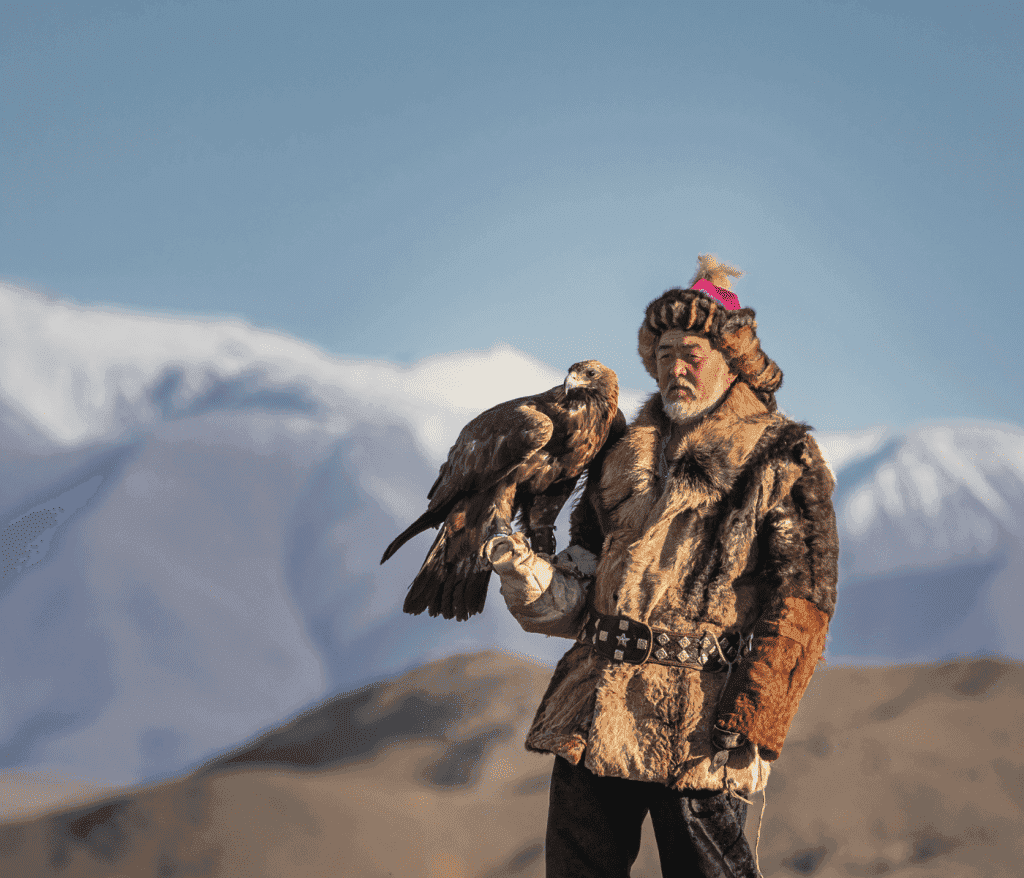
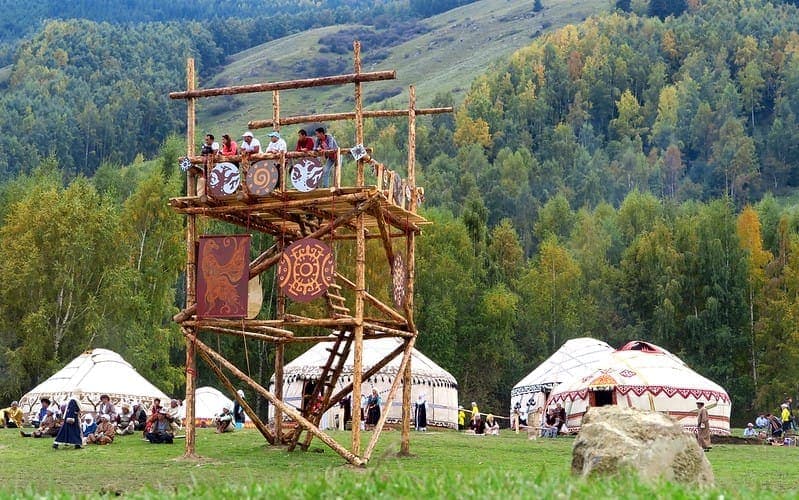
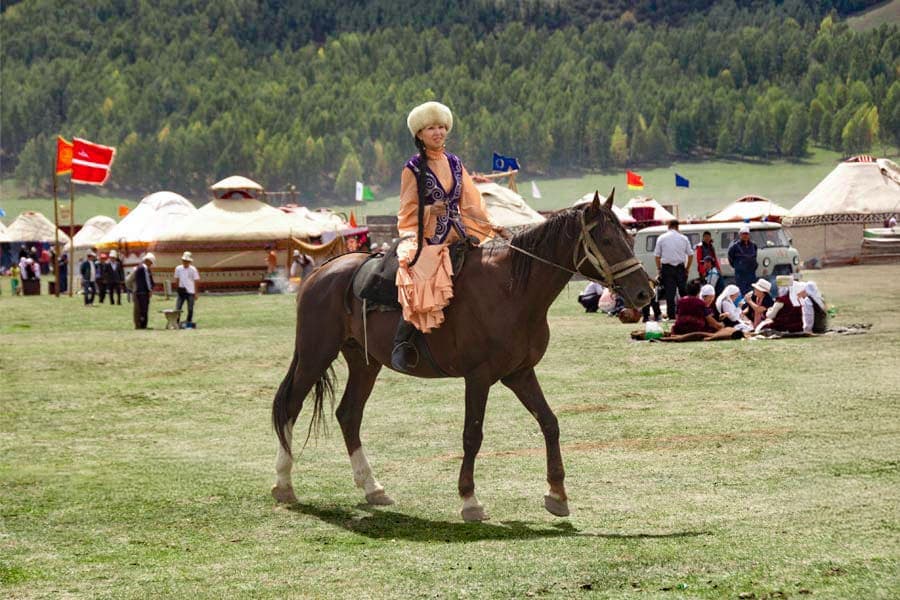
Over time, these trials of endurance grew into something greater—the art of living. The Games became the language of the steppe, speaking of honor, hospitality, and unity. At the great Tois, where thousands of yurts gathered, the nomad's cultural code was forged: here, the rider's mastery met the wisdom of the Akyns (poet-singers). Competitions evolved into a sacred ritual of continuity, where elders passed down more than just wrestling or racing techniques—they passed down a philosophy of nobility. Salbuurun became the art of harmony with a predator, while strategy games like Toguz-Korgool sharpened the intellect, proving that a nomad possesses both brawn and brilliance. In every movement, in every pattern on a horse's saddlecloth, and in every cry of a hunting golden eagle, the memory of generations is encoded—turning survival skills into a living heritage that time cannot erase.
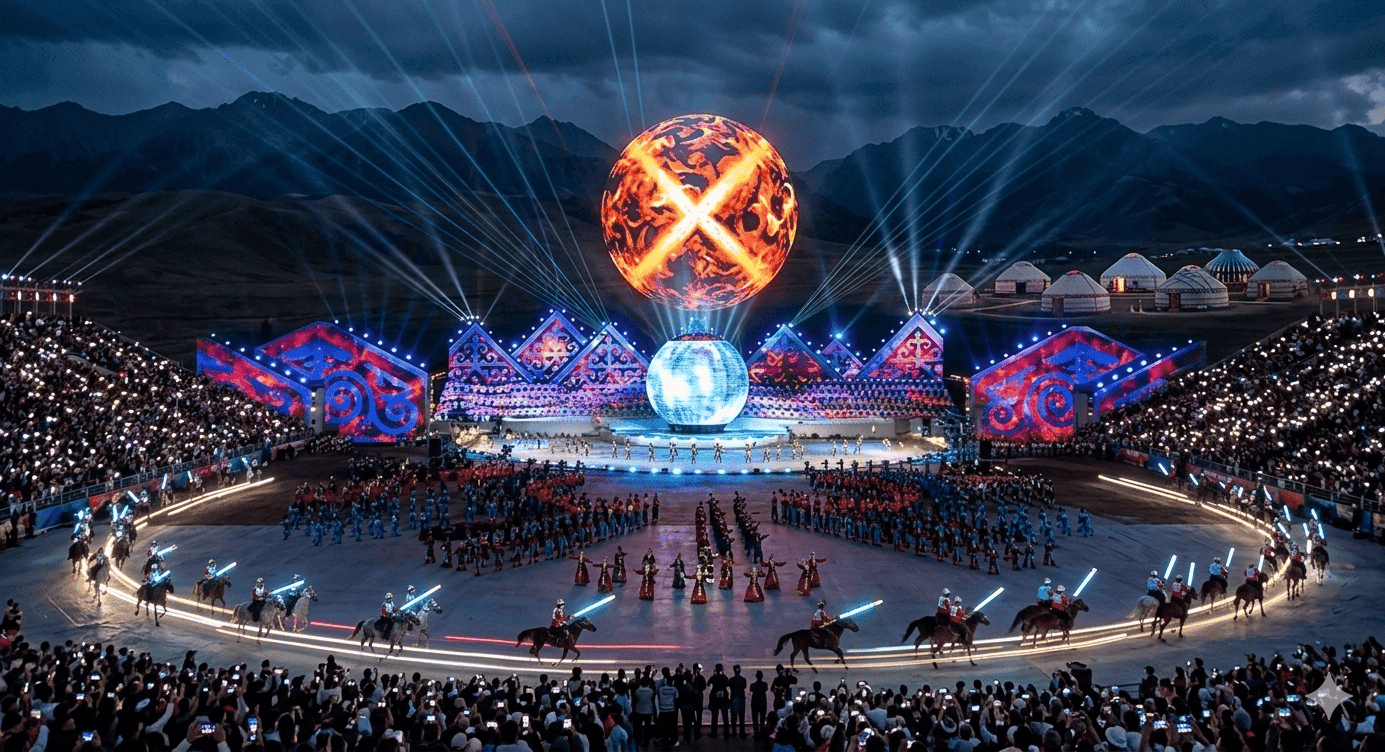
A New Beginning (Global Scale & The Future)
Today, the World Nomad Games are more than a return to roots; they are a global manifesto of a civilization that remembers its origin. In the 21st century, these steppe competitions have evolved into a unique Olympic movement of ethnosports, uniting dozens of countries and millions of viewers worldwide. Kok-Boru and Alysh wrestling now pack stadiums, while broadcasts of spring horse races are watched in London, Tokyo, and New York. This is more than sport: it is a living bridge between the past and the future, where high technology meets the primal energy of the nomad. The Games have become a symbol of openness and cultural dialogue, proving that the spirit of freedom forged in the vast steppes thousands of years ago is more relevant today than ever. The heritage of our ancestors has found a new voice, calling the world to unity through diversity, strength of spirit, and profound respect for the great history of humanity.
Nomad Adventure Tours
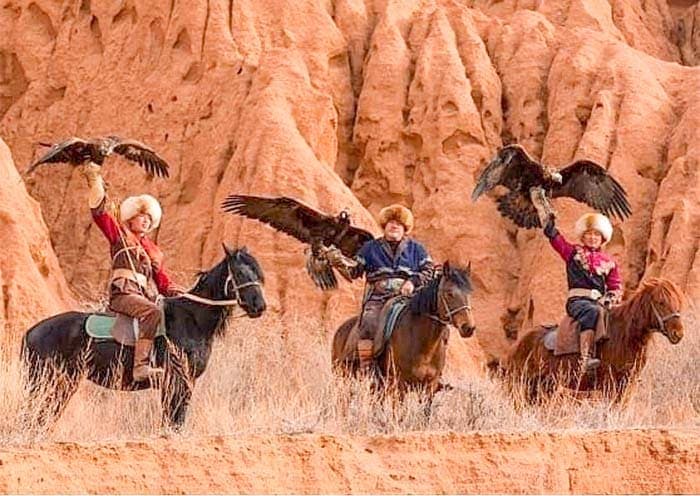
Experience a unique event where ancient nomadic traditions come to life through spectacular competition. From the intensity of Kok-Boru to the mastery of eagle hunting and the authentic atmosphere of a yurt camp, feel the unforgettable spirit of the steppe. Discover true freedom, culture, and nomadic hospitality. 🐎🏔️
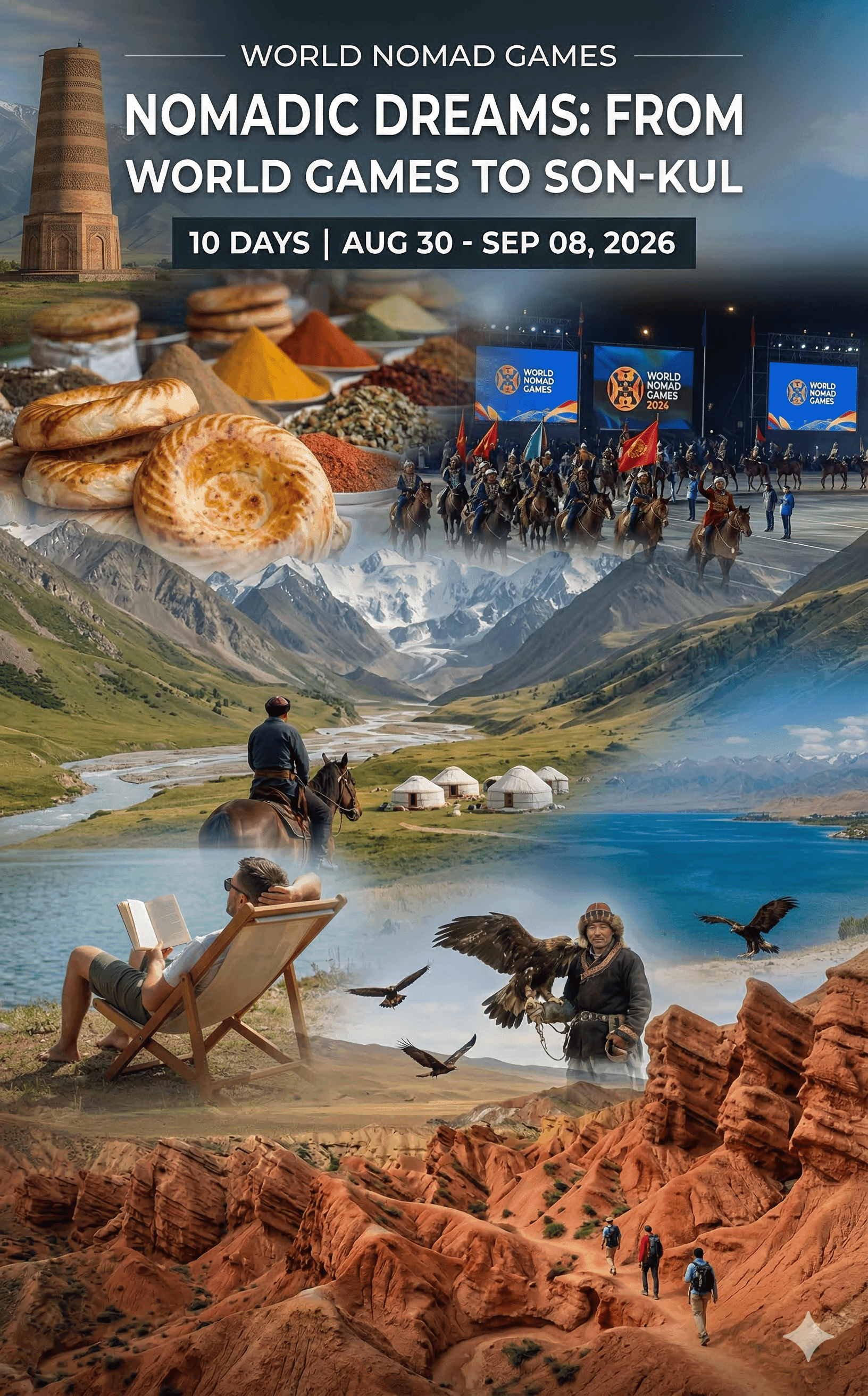
THE GREAT ODYSSEY: PATH OF THE NOMAD
World Nomad Games 2026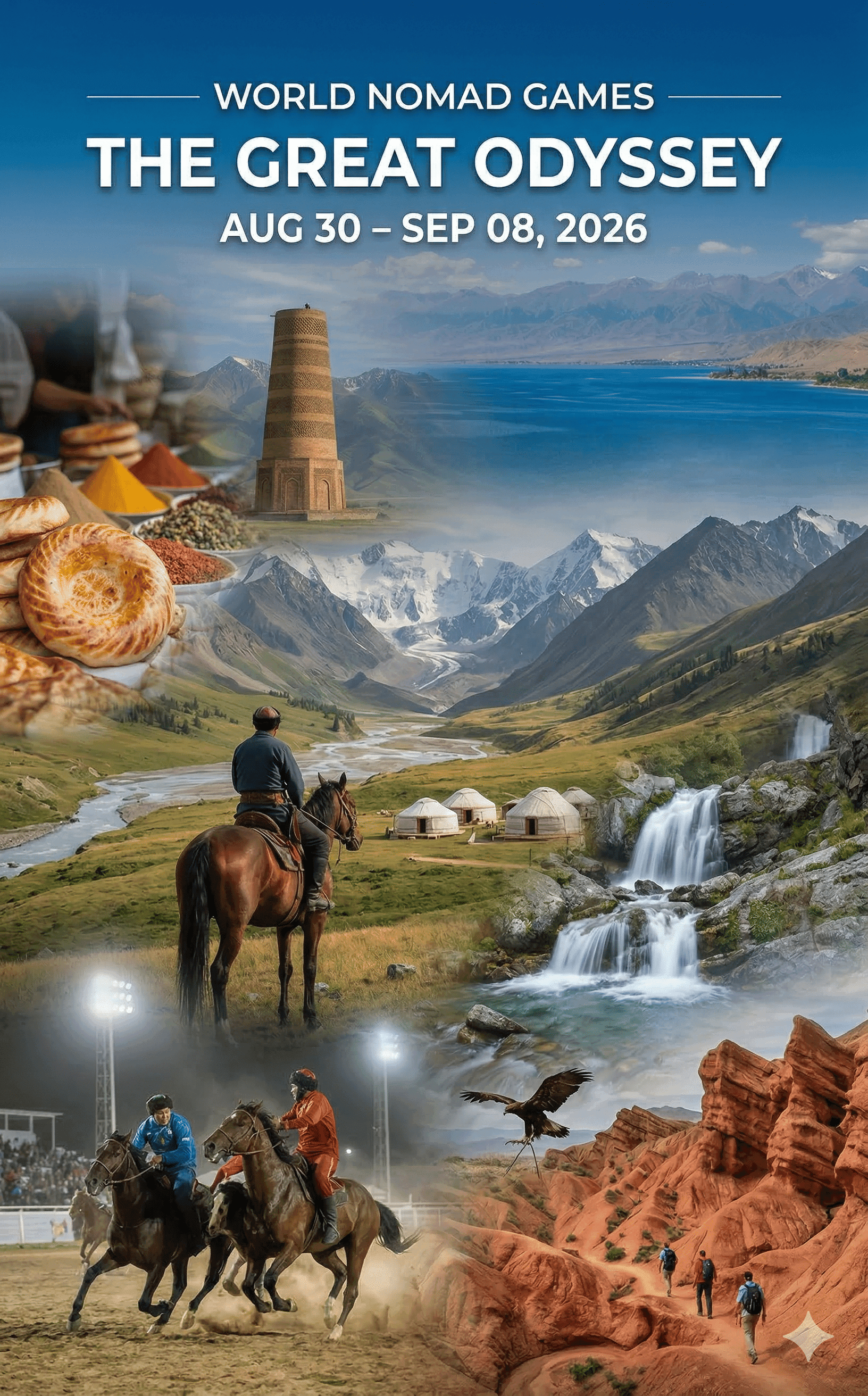
NOMADIC DREAMS: FROM WORLD GAMES TO SON-KUL
World Nomad Games 2026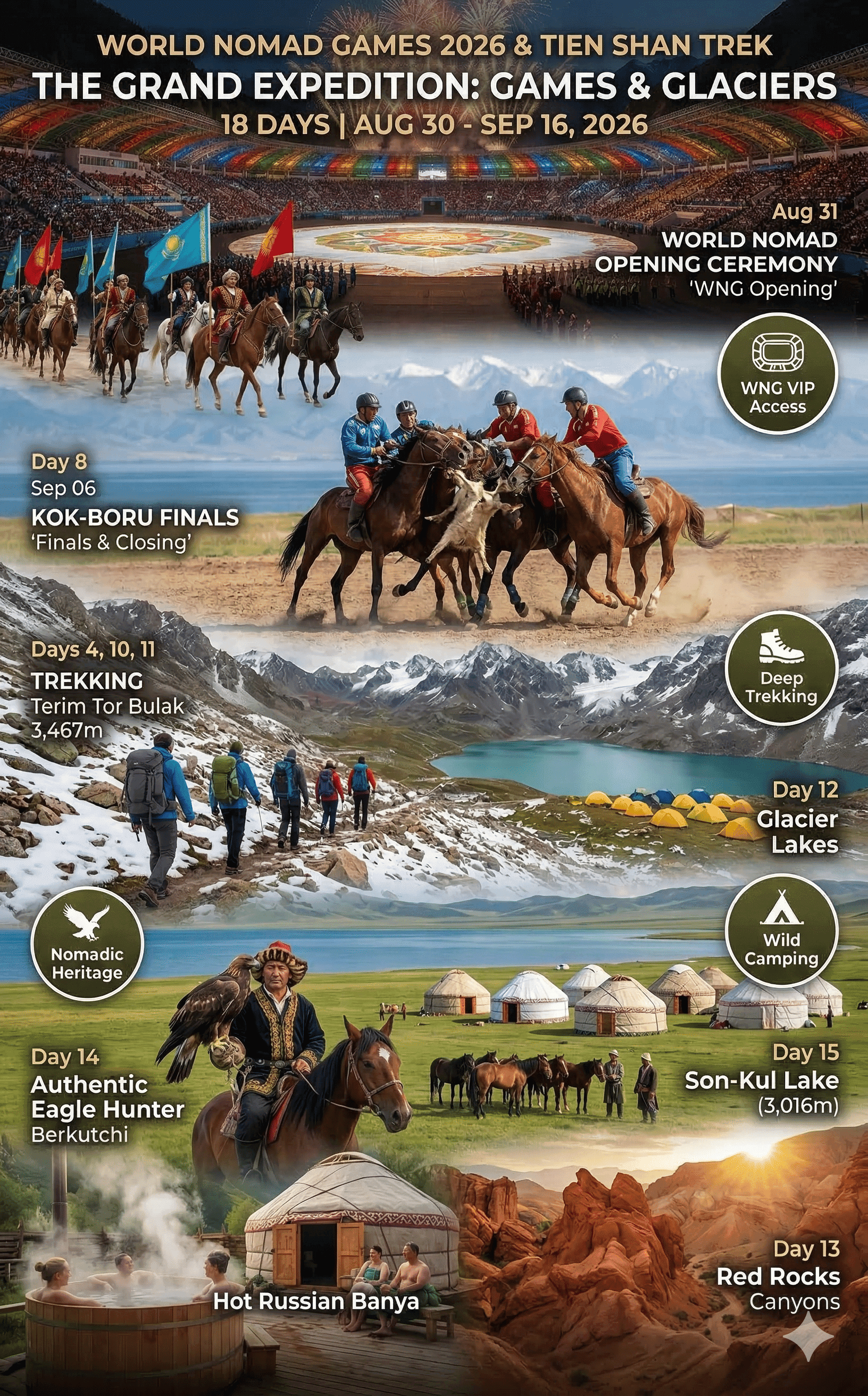
THE GRAND EXPEDITION: GAMES & GLACIERS
World Nomad Games 2026 & Tien Shan TrekVenues & Schedule
World Nomad Games 2026
The VI World Nomad Games will be held in Kyrgyzstan from August 31 to September 6, 2026—seven days of competition bringing together athletes and cultural delegations from more than 89 countries. The Games are the largest international forum for traditional nomadic sports, held under the auspices of the World Nomad Games Federation. The Opening Ceremony is timed to coincide with Kyrgyzstan's Independence Day and will take place on August 31 at the Azattyk Stadium in the capital, Bishkek. The main sporting program will unfold across several venues along the shores of the high-altitude Lake Issyk-Kul—at the Cholpon-Ata Hippodrome and Sports Complex, and the Kyrchyn Ethno-Village. The Closing Ceremony and official awards will be held on September 6 in Bishkek. The program features over 20 disciplines: equestrian sports—Kok-Boru, Baige, Er-Enish; traditional wrestling—Kuresh, Sambo, Mas-wrestling; as well as falconry, archery, and strategic board games like Toguz-Korgool and Ordo. A total of 110 sets of medals will be contested. Alongside the sports, an ethno-festival will showcase traditional crafts, national cuisine, and world music. This marks a homecoming for Kyrgyzstan, which hosted the first three Games (2014, 2016, 2018). Since then, the number of participating nations has grown from 19 to 89, transforming the event into the true 'Olympics for Nomadic Peoples'.
Read moreGallery
Frequently Asked Questions
From August 31 to September 6, 2026, in Kyrgyzstan. The Opening and Closing Ceremonies will be held at the Azattyk Stadium in Bishkek, while the competitions will take place in Cholpon-Ata and the Kyrchyn Ethno-Village on the shores of Lake Issyk-Kul.
Tickets are available for purchase on the official website worldnomadgames.org. Some events, including the ethno-festival in Kyrchyn, are free to attend.
Over 20 disciplines: equestrian sports (Kok-Boru, Baige, Er-Enish), wrestling (Kuresh, Sambo, Mas-wrestling), archery, falconry, traditional board games like Toguz-Korgool and Ordo, and even yurt-building. A total of 110 sets of medals will be contested.
Citizens of most countries can enter Kyrgyzstan visa-free for 30 to 60 days. Please check the specific requirements for your country on the official website of the Ministry of Foreign Affairs of Kyrgyzstan or at your nearest consulate.
Manas International Airport is located in Bishkek. The drive from the capital to Cholpon-Ata takes approximately 3 hours along the Issyk-Kul highway. During the Games, additional shuttle bus services will be organized between the venues.
Yes. Applications are accepted through national federations or directly via the Games' Organizing Committee. To participate, you must qualify in your home country. Detailed information is available on the official website.
Absolutely. Alongside the sporting events, a massive ethno-festival will be held in Kyrchyn, featuring traditional craft exhibitions, national cuisine tastings, concerts, fashion shows, and a scientific conference dedicated to nomadic culture.